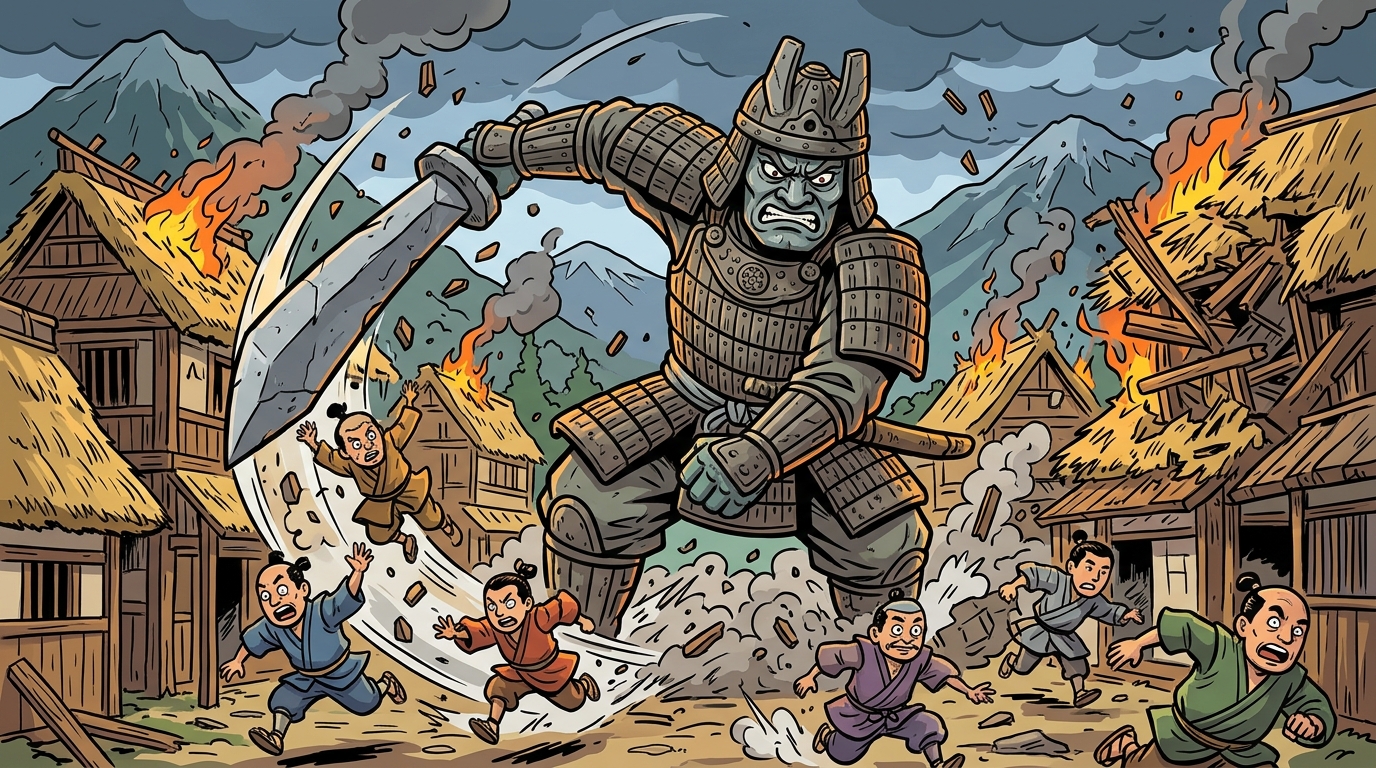
In 12th century Japanese folklore, villagers carved a relief sculpture of a titanic samurai in the side of a mountain. They called this figure Daimajin and prayed to it during hard times. One year the entire region came under the control of an evil and greedy warlord. He used his army of thugs to steal everything of value from the poor villagers and force them into slavery. They prayed to their stone god with no result.
One fateful night a young couple were on their way to the Shinto priest to be married. They are attacked by a group of thugs. The young man fights bravely, killing two of the thugs, but is killed. The remaining thugs beat and rape the young woman, leaving her to die. She crawls to the great stone statue and prays for revenge, dying on the stone, her blood spilling and miraculously seeping into the stone.
The sky grows dark around the mountain’s peak. Black clouds, exploding with multicolored flashes of light surround the mountain. It begins to rain, not water, but blood. The blood rains down on the surface of the great stone idol, seeping into the stone causing the features to soften. The black clouds draw close to the idol and explode in a thunderous crash of light and sound. The stone transforms from a stone relief into a full statue of a titanic samurai, seemingly trapped in the rock of the mountain side. In one colossal explosion of light and sound, the great samurai’s eyes jolt open in rage. It pulls itself from the mountain and begins to walk down the mountainside towards the warlord’s great castle.
The great samurai storms through the valley destroying everything in its path. Several armies of samurai rush to attack the giant as it approaches. It sweeps them away like ants, leaving a wide trail of blood, viscera, various body parts, and crushed armor. It bursts through the castle walls, toppling them as if they were papier-mâché. The giant samurai destroys and kills without mercy or discrimination, crushing the slaves along with the warlord’s thugs. It eventually locates the warlord and pulls him apart. First his left leg, then his right. His left arm, then his left. It then crushes the still living body and head in its gigantic hand, spilling the blood onto its own feet.
Black clouds form around the titanic head, flashing with light and roaring with thunder. Daimajin tries to sweep them away, but is enveloped by the great black clouds. In one titanic explosion of light and sound, the clouds instantly disperse into nothing, leaving the great samurai once again imprisoned in stone, now standing alone in the ruins of the warlord’s castle.
Plot twist: the story above isn’t really from Japanese 12th century folklore. It’s completely made up as is the legend of Daimajin. No such figure, Daimajin or otherwise appears in any part (as far as I know, please correct me if this isn’t accurate) of Japanese folklore.
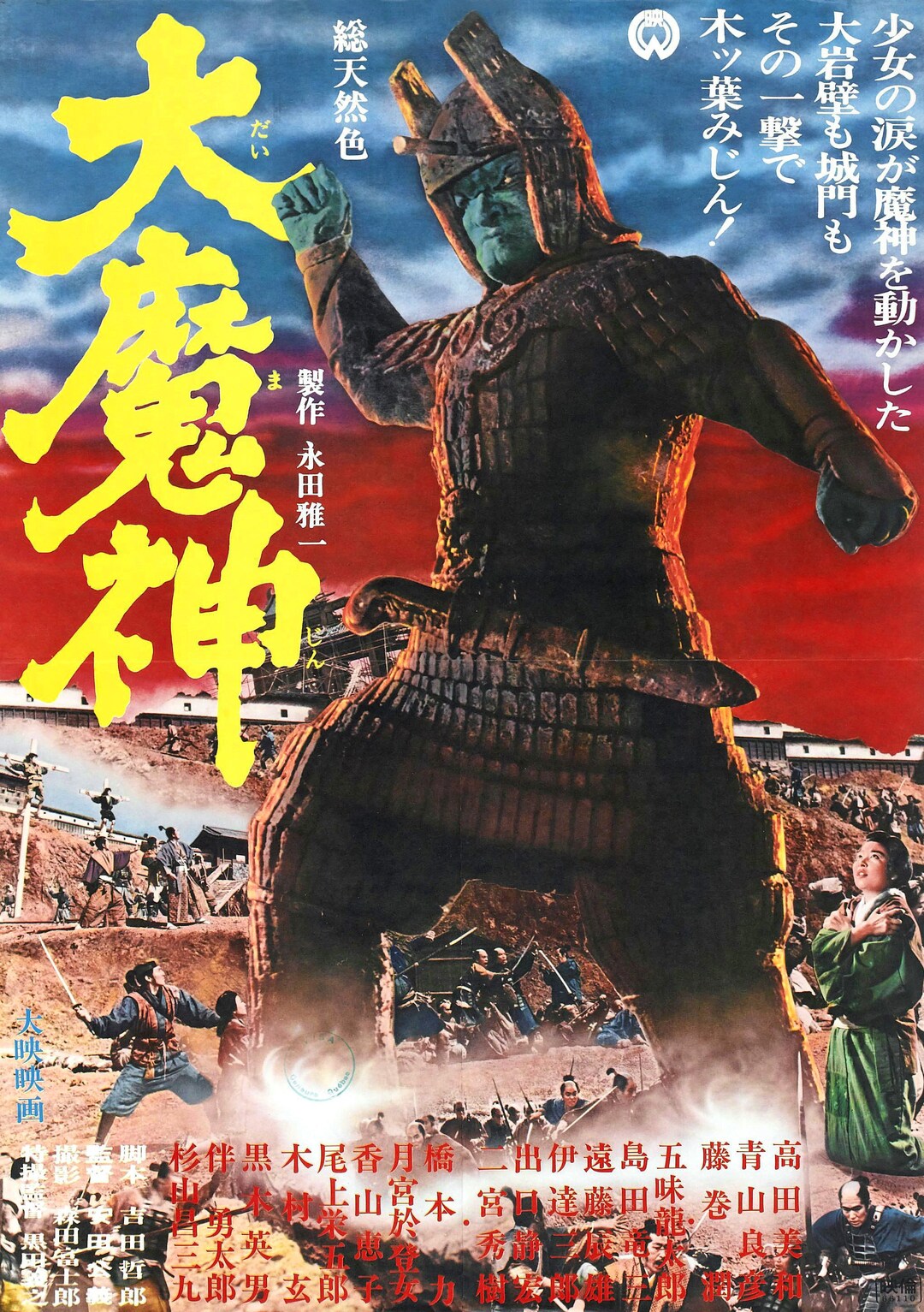
“Daimajin” 1966 was made back to back to back with its two sequels “Return of Daimajin” 1966, and “Wrath of Daimajin” 1966. Although all were made at the same time they were released a year apart beginning in 1966.
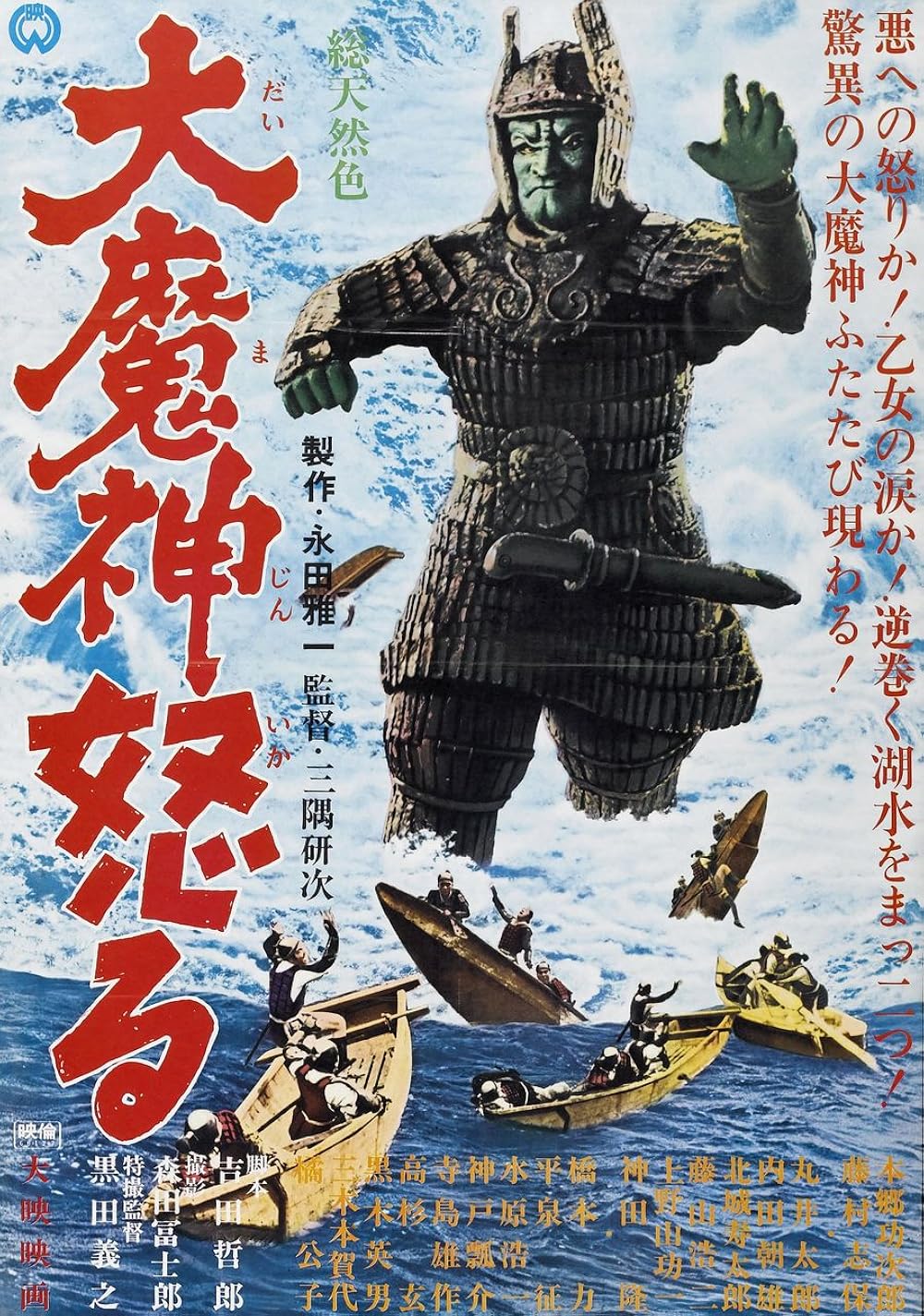
The stories of the second film and the third differ only slightly from the first. This is basically 12th century Godzilla in which the radioactive giant lizard trades scales for samurai armor and radioactive breath for a giant sword.
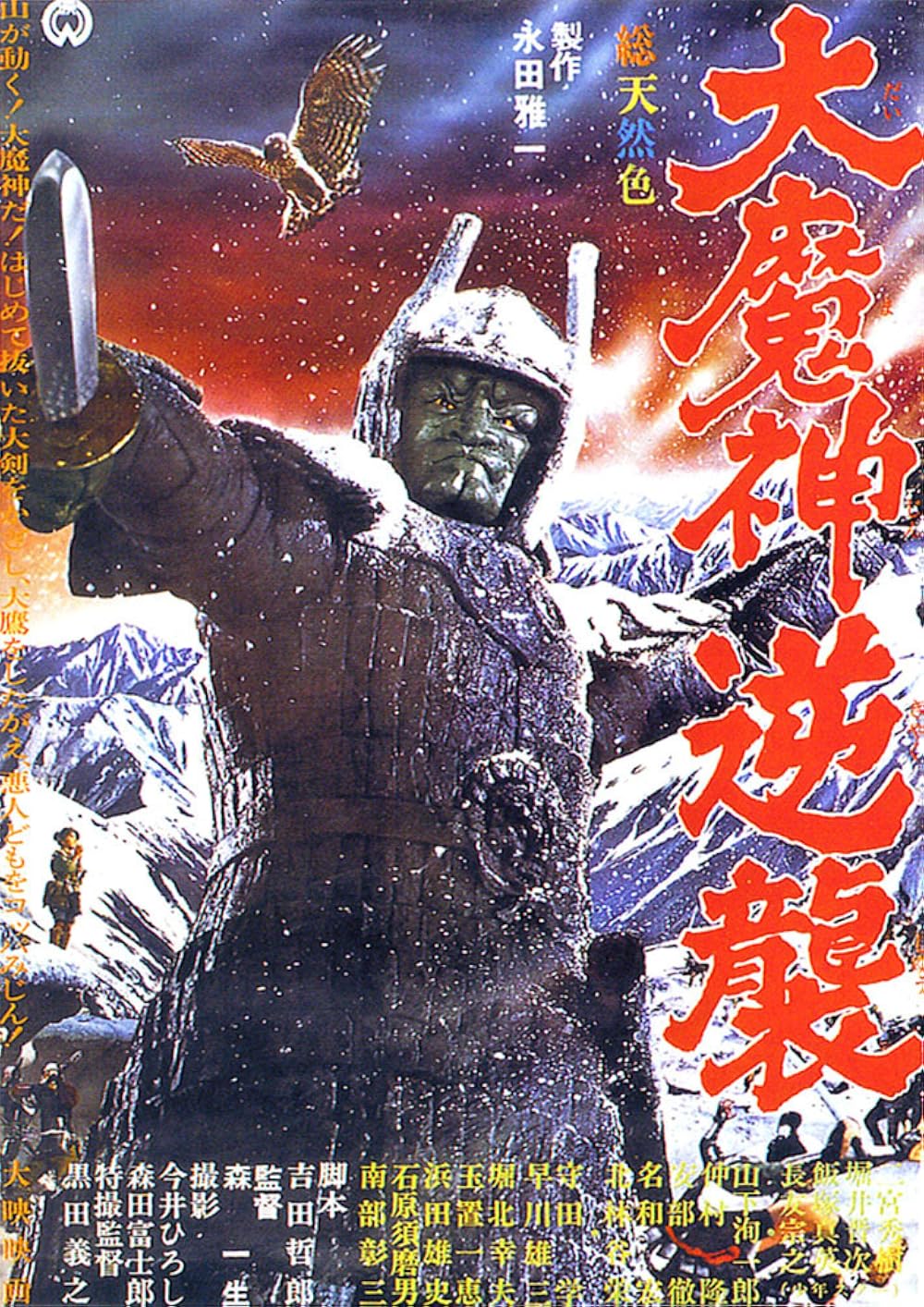
All three films are excellent. The stories may be simple but the execution is anything but that. The Tohoscope photography is breathtaking. These are gorgeous movies, rich with color and sound. The first film is streaming on YouTube for free. All three films are available for rental from Prime and other streaming resources.
The future is uncertain.
See you then.

