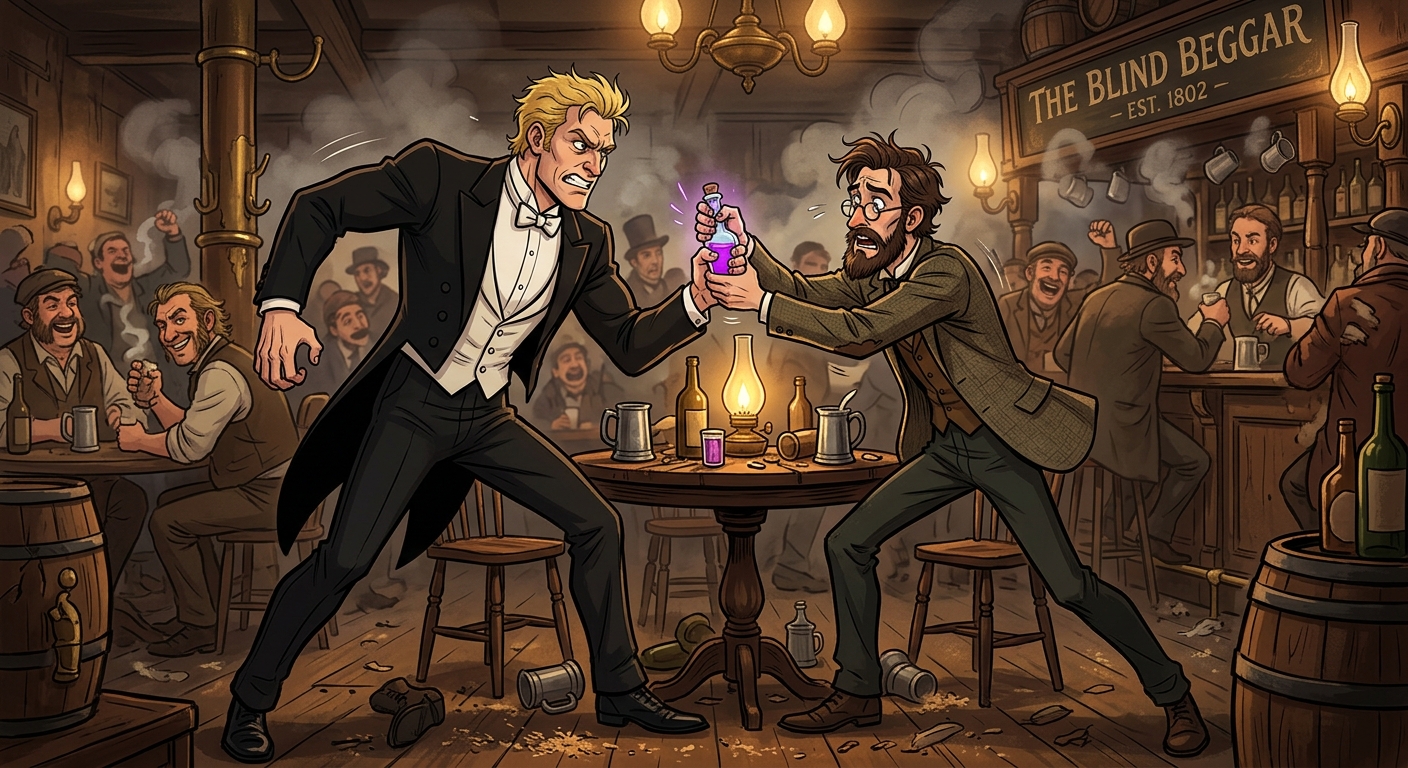
“The Strange Case of Dr. Jekyll and Mr. Hyde” by Robert Louis Stevenson is a cornerstone of horror literature. It’s also a cornerstone of the horror film. It’s also an excellent example of a film (or play) in which a convention is used that actually goes against a defining idea in the original work.
In the first stage adaptation of the story, “Dr. Jekyll and Mr. Hyde” 1887, both characters were played by the same actor, Richard Mansfield. Mr. Mansfield had read the original story and was intrigued by the idea of playing both characters. In doing so, he created the convention of a single actor playing both roles, even though the two characters, as they are described in the story, are physically very dissimilar. This convention has continued to be present in nearly every production of the story on the stage and on the screen.
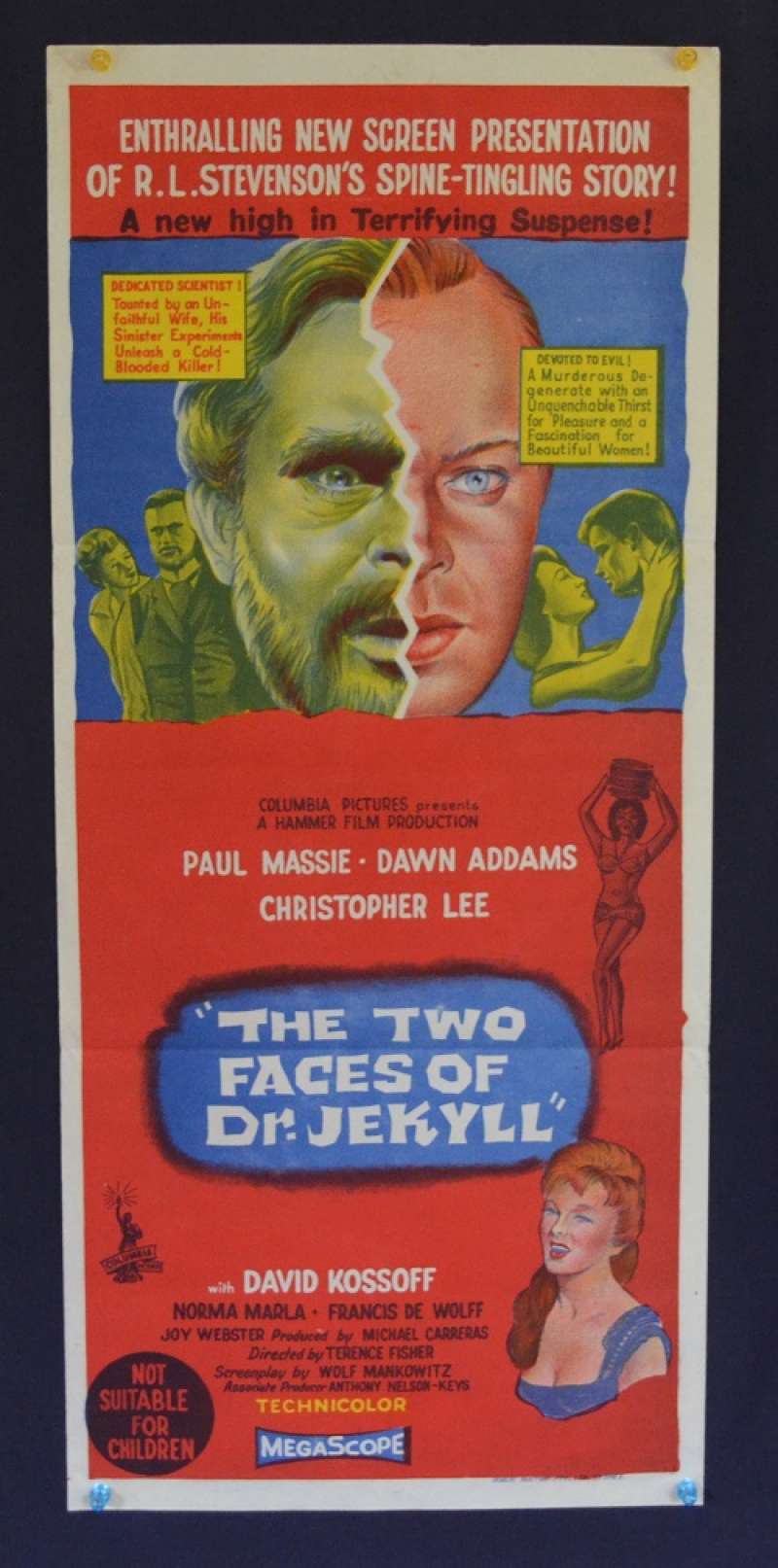
“The Two Faces of Dr. Jekyll” 1960 was Hammer Film’s first serious adaptation of the story. It follows in the tradition of having the same actor play both roles but with a significant and first time twist: Mr. Hyde is handsome, Dr. Jekyll is, if not ugly, not good looking. This was the first film adaptation to do so. (My “research” is limited to a couple of internet searches. If this isn’t correct please provide the correct information in a comment)
This is a breathtakingly beautiful film. The “MegaScope” widescreen production fills every frame with vibrant Technicolor. Terence Fisher, the director who essentially defined Hammer Horror, used every element of cinematic magic in his toolkit to create a lavish and visually sensual production. Hammer was the best at making a film look expensive when the budget was paltry by US standards. The cinematography, the score, the dynamic visual energy the film creates are unmatched by anything at the time.
The cast is excellent. The poster rightfully declares the film to be “Not Suitable For Children”, a backhand way of saying the tone of the film was more European and adult than others UK films. Curiously, Mr. Hyde himself needs to be educated in the naughty pleasures of London by Paul Allen, a character created specifically for Christopher Lee. Mr. Lee gives one of his very best performances, finally not limited by heavy makeup (The Curse of Frankenstein 1957) or insipid dialogue (Dracula 1958). He’s easily one of the best things about the film.
This is an important film, as a horror film, as a cinematic adaptation of the original story, and as a Hammer film.
The best way to see the film uncut and in the original aspect ratio is on Blu ray in the “Hammer Films – Ultimate Collection”, a collection of 20 Hammer films. The film is also streaming for free in standard definition on YouTube.
Next time we’ll look at another loose Jekyll\Hyde adaptation, the Amicus production “I, Monster” 1971
See you then

